By Robyn Krugman, LCSW
You can’t say no.
And you’ve probably told yourself it’s because you’re a giving person, a good friend, a team player.
But honestly?
It’s not really about being nice.
It’s about something deeper than that. And once you start to see it, a lot of things begin to make more sense.
If you’ve said yes to something this week while a voice in your head was screaming no… you know this feeling. People pleasing feels really familiar.
You’ve overcommitted, overpromised, and overfunctioned for so long that saying no doesn’t just feel uncomfortable…it feels wrong.
Like something bad might happen if you do.
And you might genuinely want to say no… but have no idea where to start.
If you keep reading, we’ll get into:
- Why saying no can feel so hard
- What people pleasing actually is
- What may be happening in your nervous system
How to start setting boundaries without blowing up your relationships
What People Pleasing Actually Is (It’s Not What You Think)
Can we talk about “people pleasing” for a second?
It gets labeled like it’s a personality trait. Like preferring chocolate over vanilla.
“Oh, she’s just a people pleaser.” (eye roll)
I don’t love that framing. It’s way too convenient.
This isn’t who you are. It’s something you learned.
People pleasing is often described as going out of your way to keep others happy, sometimes at the expense of your own well-being.
It’s a coping strategy. Usually developed a long time ago, when keeping people happy felt tied to your safety, your belonging, or your connection.
And it makes sense that it stuck.
Here’s what it actually looks like:
- You say “of course!” when your calendar is already about to implode
- You agree with someone… and later think, wait, why did I do that?
- You apologize when someone bumps into you
- You spend way too long drafting a text to say no… delete it… rewrite it… and still feel weird hitting send
- You feel relief when plans get canceled… followed immediately by guilt
If that’s you, you’re not “too nice.”
You’ve just been operating from a pattern that says:
keep the peace = stay safe
Why You Can’t Say No (The Real Reason)
Here’s the part most people miss.
When someone asks something of you and you want to say no, your brain doesn’t treat that moment as neutral.
It can treat it like a threat.
Not a small one either.
Your body shifts:
- your heart rate changes
- your stomach tightens
- you feel an urge to fix it immediately
That’s not random.
At some point, your system learned:
- conflict wasn’t safe
- disappointing people had consequences
- connection felt a little conditional
So it adapted.
It figured out:
keep people happy → stay connected → stay safe
You didn’t consciously choose this.
Your nervous system did.
And now…even if you know you can handle someone being briefly disappointed, your body still reacts like you can’t.
This is one reason pleasing people can be so hard to change with logic alone. You may know you are allowed to say no, but your body may still respond as if disappointing someone is dangerous. Therapy can help you work with that pattern at the level of both your thoughts and your nervous system.
How to Start Saying No (Without Becoming a Different Person)
Let’s be clear:
Telling yourself to “just say no” isn’t going to work.
(If it were that easy, you’d already be doing it.)
What actually works is slower, but it’s real and can stick. Learning how to create healthy boundaries can help you pause long enough to choose instead of automatically saying yes.
Step 1: Notice the Yes Before You Say It
Catch the moment.
“Oh… I’m about to say yes to something I don’t want to do.”
Ask yourself:
Do I want to do this, or do I just feel like I should?
There is a big difference in how your body will feel when you ask yourself that. That awareness? That’s where change starts.
Step 2: Buy Yourself Time
You are allowed to say:
“Let me check and get back to you.”
That’s not rude.
That’s you giving yourself space to choose instead of react.
Step 3: Practice the Shorter No
Most people pleasers over-explain.
Not because they want to, but because they’re trying to control how the other person feels.
You don’t need a paragraph.
You can say:
“That doesn’t work for me, but thank you for thinking of me.”
And stop there.
(Even if it feels uncomfortable at first.)
Step 4: Let the Discomfort Exist
This is the hard part.
When someone is disappointed, your system will want to:
- fix it
- soften it
- take it back
Your job is to not jump in.
Let the discomfort be there without reacting to it.
It will pass.
And every time you let it pass, it gets a little less intense.
What to Expect When You Start Setting Limits
Let’s be honest.
This will feel uncomfortable at first.
Some people might:
- push back
- question you
- act surprised
That doesn’t mean you’re doing something wrong.
It means the pattern is changing.
You’ll probably feel guilt, too.
A lot of it.
But guilt doesn’t automatically mean you’ve done something wrong.
Sometimes it just means you’re doing something new.
Give yourself permission to be clumsy with this.
You might:
- over-explain
- second guess yourself
- say yes and realize later you meant no
That’s part of the process.
Common Questions About People Pleasing
Is people pleasing the same as being kind?
No.
Kindness comes from a place of genuine desire.
People pleasing comes from fear.
One feels good.
The other feels like an obligation with a smile on top.
Can you stop people pleasing on your own?
You can absolutely make progress on your own, especially with awareness and practice.
For some people, though, people pleasing is connected to deeper patterns around attachment and safety. That’s where working with a therapist can make a real difference. Not because you’re broken, but because having someone help you untangle where this started can make the whole process feel faster, safer, and a lot less lonely.
Why do I feel resentful if I’m choosing to say yes?
Because part of you isn’t choosing. Part of you is complying to avoid discomfort. Resentment is the signal that your needs aren’t being met, even when your behavior looks cooperative on the outside.
You Didn’t Choose This Pattern, But You Can Change It
Here’s what I want to leave you with. You didn’t become a people pleaser because you’re weak or because something is wrong with you. You became one because at some point, it worked. It kept the peace, kept you connected, kept things safe.
The goal isn’t to stop caring about people. The goal is to care about yourself at the same time. To get to a place where yes means yes, no means no, and you’re not running on empty trying to keep everyone around you comfortable.
That version of you is in there. She’s just been waiting for permission.
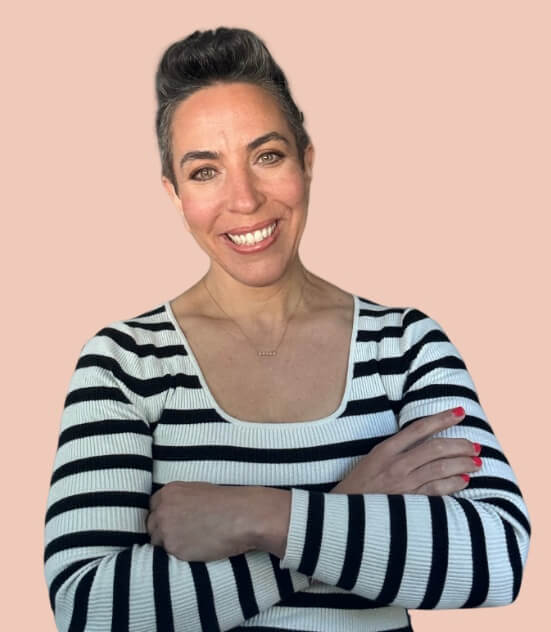
“Robyn Krugman, LCSW, is a somatic therapist and the owner of Be Seen Therapy in Scotch Plains, NJ. With over 20 years of experience and training in AEDP Level 2 and Complex Trauma II, she helps high-achieving women untangle people pleasing, anxiety, and the exhausting habit of putting everyone else first. If you’re ready to dig into the patterns underneath your people pleasing, reach out. Find her at beseentherapynj.com.“